
Table of Contents
- Why Bountiful Asphalt Needs Sealcoating in 2026
- Asphalt Sealcoating Benefits: Protection, Curb Appeal, and Lifespan
- Comparing Asphalt Sealcoating in Bountiful: What to Evaluate
- Choosing an Asphalt Sealcoating Contractor in Bountiful
- Sealcoating Preparation: What Happens Before the First Drop
- Sealcoating Drying Time and the Best Seasonal Window
- Sealcoating vs. Resurfacing, Replacement, and Concrete
- Frequently Asked Questions
Last Updated: October 14, 2026
Why Bountiful Asphalt Needs Sealcoating in 2026
Asphalt sealcoating in Bountiful is the practice of applying a protective coating to asphalt pavement to shield it from water, sun, and freeze-thaw cycles. At Utah Sealcoat & Striping, we have watched driveways and parking lots along the Wasatch Front age faster than owners expect, and the culprit is almost always the same: weather that swings hard between seasons. This guide breaks down what sealcoating actually does, what it costs in time and planning, and how to choose a contractor who will still be around when the warranty matters.
Freeze-Thaw Damage and UV Fading on the Wasatch Front
Winter along the Wasatch Front pushes water into every crack in a driveway or lot. When temperatures drop overnight, that water expands and pries the asphalt apart from the inside.
Summer does its own damage. Constant sun bakes the binder out of asphalt, turning a dark, flexible surface into a gray, brittle one.
The Federal Highway Administration’s pavement preservation guidance treats preventive maintenance like sealcoating as far cheaper than reconstruction over a pavement’s life.
Asphalt Sealcoating Benefits: Protection, Curb Appeal, and Lifespan
Sealcoating benefits fall into three buckets: surface protection, appearance, and pavement life. A fresh sealcoat blocks water and UV rays, restores that deep black finish, and buys years before major work is needed. What most listings never explain is the mechanism behind each benefit, and that mechanism is what determines whether the coating actually performs on a Wasatch Front driveway.
How a Sealcoat Actually Protects Asphalt
Asphalt is a mix of aggregate held together by a binder. Over time, oxygen and ultraviolet light oxidize that binder, and the surface turns from black and flexible to gray and brittle. Once the binder is gone, aggregate ravels away and water reaches the base course underneath.
That sacrificial layer is also why sealcoating is a repeat service rather than a one-time fix. The coating wears down so the asphalt underneath does not.
What Each Benefit Looks Like in Practice
- Surface protection: seals small cracks and pores so water cannot penetrate the base; the key is that it only works on pavement that is still structurally sound
- Curb appeal: a uniform, dark surface makes a property look maintained and cared for, which matters for resale and for commercial first impressions
- Driveway lifespan: slows oxidation and raveling, delaying resurfacing or replacement; the Federal Highway Administration’s pavement preservation guidance treats preventive maintenance as far cheaper than reconstruction over a pavement’s life
- Cost control: routine pavement maintenance avoids rebuilding a failed lot, and the gap between the two widens the longer you defer
- Safety and clarity: sealcoat pairs well with striping and pavement markings that guide traffic, and fresh markings are far more visible against a dark, sealed surface
For commercial property managers, that last point matters. Faded stalls and worn pavement markings hurt traffic flow and can raise liability questions. For a homeowner, it is simpler: a sealed driveway looks better and lasts longer.
The Local Angle: Why This Matters More on the Wasatch Front
The freeze-thaw cycle along the Wasatch Front is the single biggest driver of premature asphalt failure. Water enters any open pore or crack, freezes overnight, expands, and pries the pavement apart from the inside. A sealcoat that keeps surface water out interrupts that cycle before it starts. In a milder climate, a missed sealcoat season is an inconvenience; here, it can be the difference between a driveway that lasts and one that starts alligator-cracking within a few winters.
Sealcoating is preventive maintenance, not a repair. It protects asphalt that is still structurally sound. If the base is failing, sealing over it just hides the problem for a season.
Comparing Asphalt Sealcoating in Bountiful: What to Evaluate
No two sealcoating quotes are equal, and the cheapest one is often the most expensive over time. When comparing asphalt sealcoating in Bountiful, judge providers on preparation, materials, scheduling, and warranty, not just the number at the bottom of the estimate. Most local results stop at “get three quotes” without telling you what separates a good quote from a bad one, so here is the detail that actually matters.
What Drives the Cost of a Sealcoating Job
Sealcoating is priced by square footage, but the square footage number is only the starting point. The real cost drivers are:
- Pavement area: measured in square feet; driveways and lots are quoted on total coated area, not footprint
- Surface condition: a sound, unfailed surface needs less prep than one with widespread cracking or raveling
- Crack repair volume: crack sealing is often quoted by linear foot, so the more cracks, the higher the add-on
- Preparation required: power washing, oil-spot priming, and vegetation removal all add labor
- Number of coats: a single coat and a two-coat application are different jobs with different durability
Because these variables swing so widely, any flat per-square-foot number you see online is a rough starting point at best. Ask for a written, itemized estimate that separates prep, crack sealing, and coating so you can compare apples to apples.
Surface Preparation Standards to Demand
Preparation is where cheap quotes cut corners, and it is the number one reason sealcoat peels. A legitimate quote should specify:
- Cleaning: power washing or blowing to remove dirt, debris, and loose aggregate
- Oil and grease treatment: priming spots so the sealcoat adheres instead of sliding off
- Crack filling: routing and filling cracks with proper crack sealant, not just topping them
- Edge work: hand-edging where the pavement meets grass, curbs, and garage aprons
- Cure and cure time: a stated window before vehicles or foot traffic return
If a quote does not mention these steps, assume they are not included.
Contractor Credentials and Warranty Checklist
Before you sign, verify:
| What to Check | What Good Looks Like | Red Flag |
|---|---|---|
| Licensing and insurance | Verifiable license and liability coverage | “We don’t need that for sealcoating” |
| Written scope | Itemized prep, crack sealing, and coating | Verbal promises only |
| References | Recent local jobs you can call | No local references |
| Warranty | Written terms covering peeling and premature failure | No warranty in writing |
| Scheduling | Firm dates and a weather contingency plan | Vague “sometime next month” |
| Payment terms | Deposit and balance tied to completion | Large upfront cash demand |
The Comparison Angle Most Listings Miss
Rather than naming specific companies, the more useful approach is to compare providers on the criteria above and ask each one the same questions. A contractor who welcomes the questions and answers them in writing is usually the one who will still be around when the warranty matters. A contractor who dodges them is telling you something.
The most common complaint we hear is sealcoat peeling within months. That almost always traces back to skipped preparation or application in the wrong conditions, not the product itself. Ask any contractor exactly how they prep the surface before a single drop goes down.
Choosing an Asphalt Sealcoating Contractor in Bountiful
The right asphalt sealcoating contractor shows up when promised, preps the surface properly, and backs the work with a written warranty.
Ask every contractor these questions before you sign:
- Are you licensed and can you share references from similar jobs?
- What surface preparation is included in the quote?
- Is crack sealing part of the job or an add-on?
- What warranty covers the work, and what does it include?
- How will you schedule around our business hours or HOA access?
Reliability is not a small detail. A delayed project can shut down parking during your busiest season.
Utah Sealcoat & Striping has worked in asphalt maintenance since 1996, and every project we complete comes with a warranty. We also work around your schedule, which matters when your lot cannot sit idle for days.
Sealcoating Preparation: What Happens Before the First Drop
Sealcoating preparation decides whether the job lasts one season or several. Skipping steps here is the single biggest reason sealcoat fails early, and it is the step cheap quotes cut first.
A proper prep sequence looks like this:
- Inspect the pavement for cracks, potholes, and drainage problems.
- Clean the surface of dirt, oil, and debris so the sealcoat can bond.
- Fill cracks with crack sealing material to stop water intrusion.
- Repair damaged areas so the surface is sound before coating.
- Apply the sealcoat evenly, at the right temperature and thickness.
- Cure and reopen the surface once it is fully dry.
If a contractor skips cleaning or crack repair, the sealcoat sits on top of dirt and loose material instead of bonding to the asphalt. It looks fine for a few weeks, then peels.
Sealcoating Drying Time and the Best Seasonal Window
Sealcoating drying time typically runs 24 to 48 hours before the surface can handle foot traffic or vehicles, depending on temperature, humidity, and sun exposure.
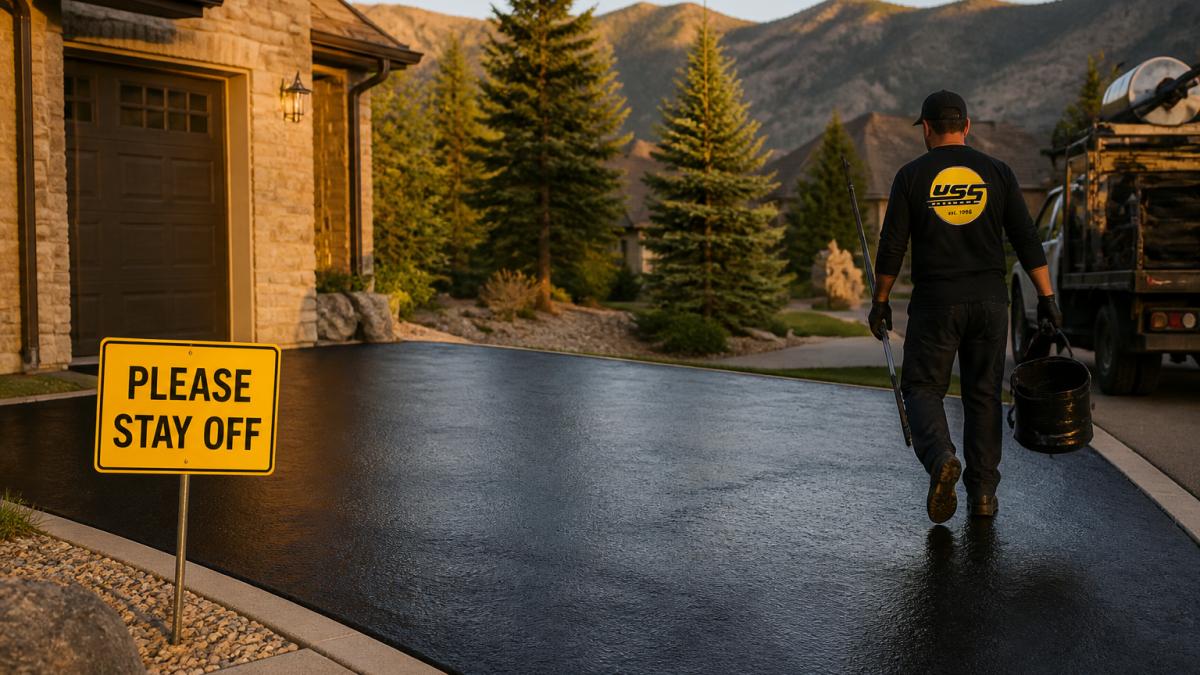
Timing the application matters as much as the product. The best seasonal window in this region runs from late spring through early fall, when daytime temperatures stay warm and overnight lows are not dropping toward freezing.
Schedule too early or too late in the year and you risk a coating that never cures right.
Ask your contractor to schedule a buffer day after application before you reopen the lot. It costs you one extra day of access and protects the entire investment from premature traffic damage.
Sealcoating vs. Resurfacing, Replacement, and Concrete
Sealcoating is the right choice for sound asphalt that needs protection, while resurfacing, replacement, and concrete are answers to different problems. Matching the service to the pavement’s actual condition saves money and avoids wasted work.
Here is how the options compare:
| Option | Best For | Typical Trigger |
|---|---|---|
| Sealcoating | Sound asphalt needing protection | Fading, minor surface wear |
| Crack sealing | Isolated cracks in good pavement | Visible cracks, no base failure |
| Resurfacing | Worn top layer over a solid base | Widespread surface damage |
| Full replacement | Failed base or structural damage | Sinking, alligator cracking |
| Concrete driveway | Owners wanting a different material | New build or full rebuild |
A concrete driveway or stamped concrete surface is a different material entirely and is not sealcoated the same way.
For most driveways and lots that are still structurally sound, sealcoating plus crack sealing is the practical, cost-effective path.
Frequently Asked Questions
How often should asphalt be sealcoated in Bountiful?
Most asphalt in the Bountiful area benefits from sealcoating every two to three years. The freeze-thaw cycles along the Wasatch Front, combined with intense summer UV, wear down a sealcoat faster than in milder climates. Driveways with heavy traffic or visible fading may need it closer to the two-year mark. If you are unsure, ask a contractor to assess the asphalt condition during a free estimate. Waiting too long lets cracks widen and turns a sealcoating job into a full asphalt repair project.
What preparation is needed before asphalt sealcoating?
Proper sealcoating preparation starts with cleaning the surface of dirt, oil, and debris, usually with power blowing or washing. Next comes crack sealing, where cracks are filled so water cannot get underneath. Edges and damaged spots get patched, and grass or dirt along the perimeter is trimmed back. Oil spots need a primer so the sealcoat bonds correctly. Skipping these steps is the main reason sealcoat peels within months, so ask any contractor exactly how they prep before they start.
How long does asphalt sealcoating take to dry?
Sealcoating drying time depends on weather, but most applications are dry to the touch in four to eight hours and ready for foot traffic in about 24 hours. Vehicles should stay off for 24 to 48 hours, and heavy trucks or commercial equipment may need 48 to 72 hours. Cool, humid, or overcast days stretch those windows. Schedule service when the forecast shows warm, dry weather, and follow the contractor’s specific guidance, since drying time varies with the mix and application method.
Can sealcoating repair cracks and potholes?
Sealcoating protects asphalt, but it does not fix structural damage. Cracks and potholes need crack sealing and patching first, using a rubberized filler or hot-mix asphalt, before any sealcoat goes down. If a pothole is large or the base underneath is failing, resurfacing may be the better option. A good asphalt sealcoating contractor will tell you honestly which repairs are needed and which areas are beyond sealing, rather than coating over a problem that will reappear within a season.
Bountiful’s freeze-thaw cycles and summer sun will keep working on your asphalt whether you plan for it or not. The owners who stay ahead of that damage seal on a schedule and skip the emergency replacement bill. Utah Sealcoat & Striping brings 30 years of asphalt maintenance experience, a written warranty on every project, and scheduling that works around your business or HOA. Get started with Utah Sealcoat & Striping and request your free quote today.
