

Last Updated: November 5, 2026
Quick Summary
To book a commercial asphalt inspection in 2026, decide when your pavement needs attention, gather property details such as address, square footage, and photos of known problems, then request a written quote that itemizes the areas covered and deliverables. Confirm the report will include photos, a prioritized repair list, and drainage notes before you confirm the booking.
- Schedule the inspection before your busy season rather than during it.
- Gather the address, square footage or site plan, known problem areas, and photos before calling.
- Request a written quote that itemizes covered areas and deliverables instead of a verbal estimate.
- A complete report should include a defect inventory, photos, a prioritized repair list, and drainage notes.
Table of Contents
- What a Commercial Asphalt Inspection Covers
- Step 1: Decide When Your Property Needs an Inspection
- Step 2: Gather Property Details Before You Call
- Step 3: Choose an Inspector or Paving Contractor
- Step 4: Request the Booking and Understand Costs
- What Your Asphalt Inspection Report Should Include
- Turning Inspection Findings Into a Commercial Asphalt Repair Plan
- Schedule Your Inspection and Request a Free Quote
- Frequently Asked Questions
Booking a commercial asphalt inspection in 2026 is simpler when you know what to prepare, what the inspection covers, and what you should receive afterward. Utah Sealcoat & Striping has over 30 years of experience in the asphalt maintenance field, and the steps below reflect how property managers and facility owners commonly approach this process. Use this guide to decide when your pavement needs attention, gather the right details, and request a quote with confidence.
What a Commercial Asphalt Inspection Covers
A commercial asphalt inspection is a structured review of your paved surfaces. Drainage is often where small problems start, so a thorough review looks at low spots, standing water, and areas where runoff collects.
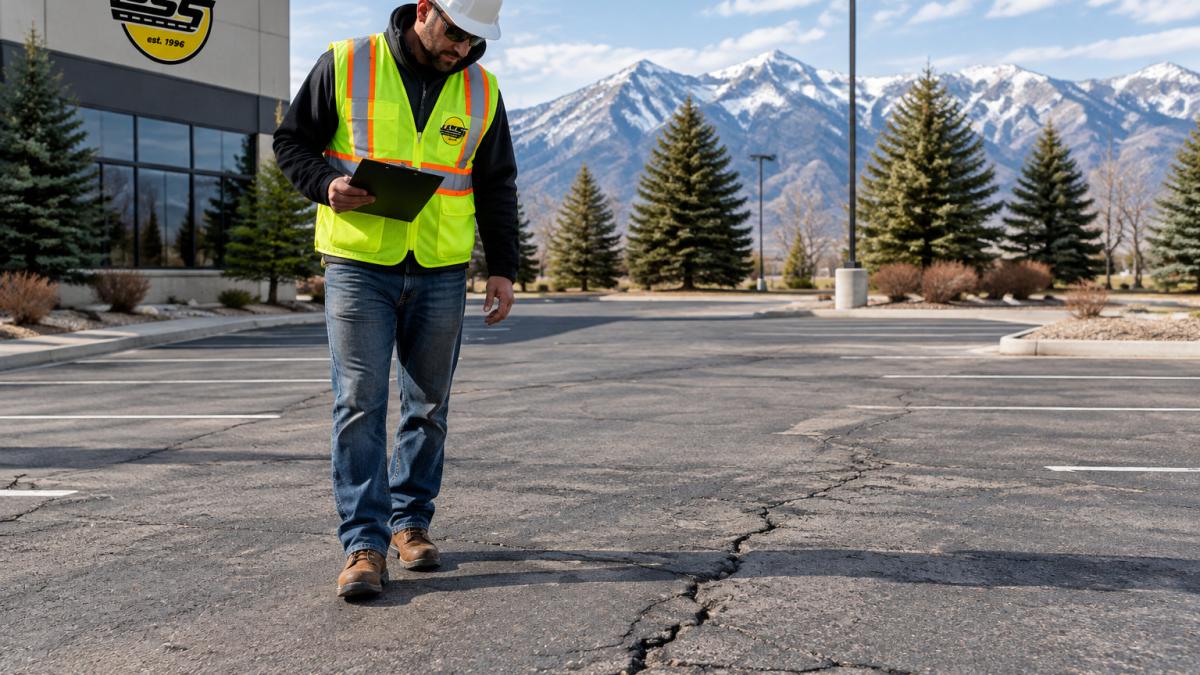
!An inspector in a high-visibility vest and hard hat walking a commercial parking lot in Utah with a clipboard, mountains and evergreen trees in the background, checking cracked asphalt surface
Step 1: Decide When Your Property Needs an Inspection
Timing matters. Most property managers schedule an inspection when they notice visible wear, such as widening cracks, new potholes, or faded striping that affects traffic flow.
Schedule an inspection before your busy season, not during it. If you want to see the sealcoating service you may be booking, review our sealcoating service details. If your lot serves customers or tenants year-round, aim for a window when work can be done without disrupting access. Planning ahead gives you room to compare options and avoid rushed decisions.
Step 2: Gather Property Details Before You Call
Having details ready makes the booking faster and the quote more accurate. Prepare the following:
- The property address and the specific areas to be inspected, such as parking lots, drive lanes, or private roads
- Approximate square footage, or a site plan if you have one
- A list of known problem areas and when you first noticed them
- Photos of cracking, potholes, drainage issues, or faded striping
- Your access requirements, including gate codes, operating hours, and any restricted zones
- Any prior maintenance records, including previous sealcoating or striping work
If you do not know the square footage, a rough estimate based on the lot’s length and width is usually enough to start the conversation.
Step 3: Choose an Inspector or Paving Contractor
You can work with an independent inspector or a paving contractor, and each has a different role. An independent inspector evaluates the pavement and gives you an unbiased condition report. A paving contractor inspects while also offering to perform the repairs. Many property managers prefer separating the two so the recommendations are not shaped by the work that follows.
When evaluating providers, ask about their experience with commercial properties similar to yours, the areas they serve, and how they document findings. Confirm they can explain their process in plain language.
Step 4: Request the Booking and Understand Costs
When you contact a provider, state your property details, your timeline, and your goals. Ask what the inspection includes, how long it takes, and what you will receive at the end. Pricing depends on quantity, dates, and delivery, so inspection costs vary with the size and scope of the property.
For current pricing for your property, visit the Utah Sealcoat & Striping website or request a free quote.
Watch out: Do not compare quotes that describe different scopes. Confirm that each quote covers the same areas and deliverables before you choose.
How the Booking Process Typically Works
Booking a commercial asphalt inspection in 2026 generally follows a predictable sequence, and knowing it helps you avoid delays:
- Initial inquiry. You submit your property address, approximate square footage, and a short description of known issues through a website form, phone call, or email. Include photos if you have them; they help the provider scope the visit before anyone is on site.
- Scope confirmation. The provider confirms which areas will be inspected and what the report will include. This is the point to ask about access requirements, gate codes, and operating hours.
- Scheduling window. You agree on a date and time, often with a window rather than an exact hour because weather and site access can shift the start. Ask how the provider handles rescheduling due to rain or snow.
- Pre-visit checklist. The provider may send a short list of items to have ready, such as a site contact, a parking plan for the inspector’s vehicle, and any prior maintenance records.
- On-site inspection. The inspector walks the paved areas, documents distress and drainage conditions, and may take measurements or photos. Ask who will be on site and what credentials they carry.
- Report delivery. Confirm with your provider when and how the written report will be delivered.
- Quote for recommended work. If repairs are recommended, ask whether the inspection fee is credited toward repair work if you proceed, since policies vary.
What to Ask Before Confirming
- What areas will be inspected, and will the report include a map or photos?
- How soon after the inspection will I receive the written report?
- Is there a warranty on any recommended repairs, and what does it cover?
- How do you handle scheduling changes or delays?
- Who will be on site, and what are their qualifications?
- Is the inspection fee credited toward repair work if I proceed?
- What is the cancellation or rescheduling policy?
Comparing Quotes on Equal Terms
To compare quotes fairly, build a simple side-by-side sheet with the same rows for each provider: areas inspected, documentation included (photos, map, prioritized repair list), report delivery timeline, inspector qualifications, warranty terms on recommended repairs, and whether the fee is credited toward work. A lower quote that omits photos or a prioritized repair list is not the same product as a higher quote that includes them. Most property managers find that the deliverable list matters more than the headline fee, because the report is what drives the maintenance budget and the board or ownership conversation.
Before you confirm a booking, compare what each provider’s quote actually includes.
| Booking stage | What happens | What to confirm |
|---|---|---|
| Initial inquiry | Submit address, square footage, known issues | Include photos if available |
| Scope confirmation | Provider confirms areas and report contents | Access, gate codes, operating hours |
| Scheduling window | Date agreed, often a window | Rescheduling policy for rain or snow |
| Pre-visit checklist | Items to have ready on site | Site contact, parking plan, prior records |
| On-site inspection | Inspector documents distress and drainage | Who attends and their credentials |
| Report delivery | Written report delivered | Delivery timing and format |
| Quote for repairs | Recommended work priced | Whether inspection fee is credited |
What Your Asphalt Inspection Report Should Include
A useful report turns observations into decisions. It should list each distressed area with its location, type of defect, and severity. Photos should accompany each finding so you can see the problem without visiting the site. The report should also rank repairs by urgency, separating items that need immediate attention from those that can wait for the next maintenance cycle.
Look for a clear summary of drainage conditions and a recommended maintenance schedule. If the report includes striping and sign observations, that helps you plan both pavement and traffic-flow work in one project. See how durable striping is documented and what it delivers for property appeal.
The Deliverables to Expect
A complete commercial asphalt inspection report commonly includes the following components. Use this list to confirm what a provider will deliver before you book:
- Condition summary. A plain-language overview of overall pavement health, with the inspected areas named and mapped.
- Defect inventory. Each finding listed by location, defect type (cracking, rutting, raveling, potholes, edge breakdown, drainage issues), and severity.
- Photo documentation. Images tied to each finding, ideally with a reference point so the location is obvious.
- Prioritized repair list. Findings grouped into categories such as immediate safety issues, near-term repairs, and long-term maintenance.
- Drainage assessment. Notes on low spots, standing water, and runoff patterns near curbs and catch basins.
- Maintenance recommendations. A suggested schedule for sealcoating, crack sealing, striping refresh, and other routine work.
How Findings Are Prioritized
A common pattern is to sort findings into three tiers. Tier 1 covers safety and liability items, large potholes, trip hazards, and failures that affect traffic flow, which warrant attention first. Tier 2 covers drainage problems and active deterioration, because standing water and unchecked cracking accelerate damage and raise future costs. Tier 3 covers cosmetic wear such as faded striping and light surface oxidation, which can be scheduled as part of a broader project. Ask the inspector to explain the reasoning behind each tier so you can defend the priorities to ownership.
How to Act on the Report
Once you have the report, share it with your board, ownership group, or facility team in a format they can review. Use the prioritized list to build a maintenance timeline that fits your budget and operations. Some repairs can be completed in a single day, while others, such as drainage correction or full resurfacing, may take longer and require coordination with tenants or customers.
Watch out: Do not treat the report as a one-time document. Pavement conditions change with freeze-thaw cycles and traffic, so schedule a follow-up inspection on a regular cadence, often annually for busy commercial lots, and compare findings against the prior report to catch deterioration early.
Turning Inspection Findings Into a Commercial Asphalt Repair Plan
Start by sorting findings into three groups: safety issues, drainage problems, and cosmetic wear. Safety items such as large potholes and trip hazards come first. Drainage problems come next, because standing water accelerates damage. Cosmetic issues, including faded striping and light surface wear, can be scheduled as part of a broader project.
Build a timeline that fits your budget and operations. Some repairs can be completed in a single day, while others, such as drainage correction or full resurfacing, may take longer and require coordination with tenants or customers.
If the inspection finds drainage problems, review the guidance in How to Repair Asphalt Drainage Issues Effectively before finalizing your plan. Striping changes are often needed after repairs, so you may also want to review Durable Striping: Increase Business Value & Appeal and our striping services.
Schedule Your Inspection and Request a Free Quote
Booking a commercial asphalt inspection in 2026 starts with clear details, a realistic timeline, and a written scope. Use the steps above to decide when to inspect, gather your property information, and compare providers on what they actually deliver. At Utah Sealcoat & Striping, we work around your schedule, maintain open communication, and back our work with a warranty.
Ready to move forward? Request a free quote and we will help you schedule your commercial asphalt inspection.
Frequently Asked Questions
How do I book a commercial asphalt inspection?
Start by requesting a site assessment from a provider that serves your area. Have your property address, approximate lot size, and a list of visible problems ready, such as cracking, potholes, or ponding water. Ask for the inspection scope in writing, confirm who will perform the work, and ask when the written report will arrive. Pricing depends on property size, access, and the depth of the inspection, so request a quote from Utah Sealcoat & Striping for current rates and scheduling availability.
What does a commercial asphalt inspection include?
A typical inspection reviews surface condition, visible distress such as cracking and raveling, drainage performance, and signs of structural weakness. The inspector documents problem areas with notes and photos and recommends maintenance or repair priorities. Ask whether the inspection includes a written condition report and whether it covers safety concerns such as trip hazards in walkways and loading areas.
How should I prepare for a commercial pavement inspection?
Gather your property layout or site plan, any prior maintenance or repair records, and notes on known problem areas. Confirm access hours and any tenant or customer traffic restrictions so the inspector can work safely. Walk the lot beforehand and note where water collects after rain, since drainage issues often drive the most costly repairs. Having this information ready shortens the assessment and makes the resulting report more useful.

