
Table of Contents
- Start With a Parking Lot Inspection and Condition Assessment
- Your Parking Lot Winter Preparation Checklist
- Parking Lot Pothole Repair Before Winter Hits
- Fix Grading and Drainage to Prevent Standing Water
- Build a Parking Lot Snow Removal Plan
- Refresh Striping and Mark Obstacles for Plow Operators
- Parking Lot Maintenance After Winter Ends
- Schedule Your Winter Preparation Walkthrough
- Frequently Asked Questions
Last Updated: November 8, 2026
Start With a Parking Lot Inspection and Condition Assessment
Learning how to prepare parking lots for winter starts with a walk-through of the pavement where you record cracks, potholes, drainage problems, and faded markings before cold weather locks them in. A thorough inspection is the best way to start any winter prep job, because you can’t fix what you haven’t mapped.
Cold weather turns small problems into expensive ones. Water gets into a crack, freezes, expands, and pushes the pavement apart. By spring, a hairline crack is a crater.
So walk the lot in daylight with a clipboard or phone. Check these areas first:
- Entrances and drive lanes, where traffic loads are heaviest
- Low spots, where water pools after rain
- Drain grates and catch basins, which often clog with leaves
- Curbs and parking islands, which take plow damage every year
- Faded striping and accessible spaces, which snow will hide
- Existing potholes and alligator cracking, which spread fast in freeze-thaw cycles
For a quick professional read on your lot’s condition, you can grade your asphalt before committing to repairs.
What to Document Before Cold Weather Arrives
Photograph every problem area and note its rough size and location. Mark the date. This record does two things: it helps you prioritize repairs by risk, and it gives you a baseline to compare against after winter.
A common mistake is skipping the record and relying on memory. Six months later, nobody remembers which crack was sealed and which one was ignored. Write it down.
Your Parking Lot Winter Preparation Checklist
Knowing how to prepare parking lots for winter means following a checklist that keeps the work in order so nothing gets missed before the first freeze. Here’s the sequence we follow on commercial properties:
- Inspect and document pavement conditions
- Repair potholes and failed patches
- Clean and fill cracks
- Apply sealcoating if weather allows
- Correct grading and clear drainage
- Restripe and mark obstacles
- Confirm your snow removal plan and deicing supplies
Timing matters more than most property managers expect. Sealcoating needs warm, dry conditions to cure, so it has to happen before cold temperatures settle in. Crack sealing can run later into fall but still needs dry pavement.
Watch out: sealing over wet or dirty cracks traps moisture underneath and the seal fails within weeks. Clean and dry the crack first, every time.
Here is the order we follow to get a commercial lot ready before the first freeze.
| Step | What to do | Timing note |
|---|---|---|
| 1 | Inspect and document pavement conditions | Walk the lot in daylight |
| 2 | Repair potholes and failed patches | While pavement is still workable |
| 3 | Clean and fill cracks | Needs dry pavement; can run later into fall |
| 4 | Apply sealcoating if weather allows | Needs warm, dry conditions to cure |
| 5 | Correct grading and clear drainage | Clean every grate and catch basin |
| 6 | Restripe and mark obstacles | Before snow hides curbs and islands |
| 7 | Confirm snow removal plan and deicing supplies | Before the first freeze |
Parking Lot Pothole Repair Before Winter Hits
Parking lot pothole repair before winter is not cosmetic. An open pothole collects water, and that water freezes and breaks the edges apart, so the hole grows all season under plow traffic.
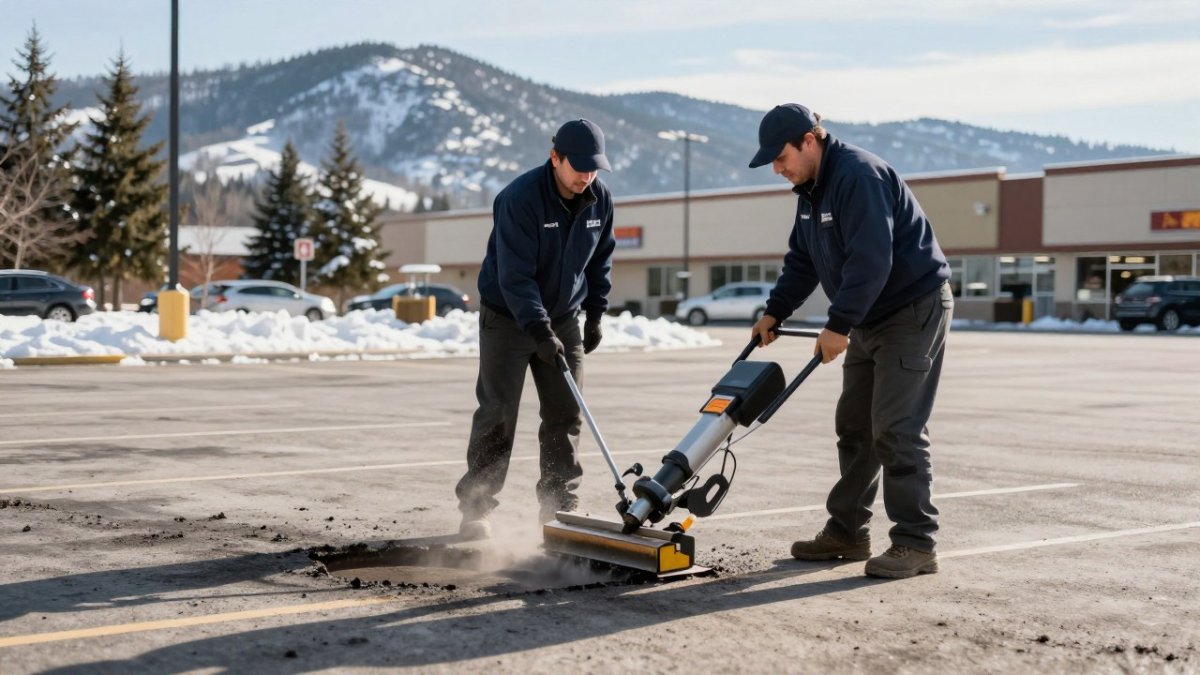
Fix potholes while the pavement is still workable. Clean out loose debris, square up the edges, and fill with proper asphalt mix, then compact it. A quick cold-patch fix can get you through, but it rarely lasts a full winter of plowing.
The same logic applies to any failed patch or crumbling area. If the base under the asphalt is soft, patching the surface alone won’t hold. That’s a sign you need a deeper repair.
Crack Sealing and Sealcoating Timing
Crack sealing and sealcoating are the two best preventive maintenance moves you can make before winter. Crack sealing keeps water out of the pavement. Sealcoating protects the surface from sun, salt, and moisture.
Do them in the right order and the right season:
- Crack sealing works best on dry cracks, cleaned and filled with flexible sealant
- Sealcoating needs warm, dry weather and time to cure before the first freeze
- Never sealcoat over a wet lot or one with active potholes, fix those first
If you’re planning sealcoating this fall, book sealcoating early, because schedules fill as the season shortens. And if cracks are your main problem, crack sealing is the targeted fix that stops water infiltration at the source.
Fix Grading and Drainage to Prevent Standing Water
Standing water is the enemy of a winter-ready lot. Water that pools on the surface seeps into cracks, freezes, and heaves the pavement. It also turns to ice, which is a slip hazard for customers and staff.
Walk the lot after a rain and note where water sits more than a day. Those low spots need attention. Options include re-grading the surface, clearing clogged drains, and adding or repairing catch basins so runoff has somewhere to go.
Clean every drain grate and catch basin before winter. Leaves and debris block flow, and a blocked drain means water backs up onto the lot. For a deeper look at solving these problems, read our guide on how to repair asphalt drainage issues.
Build a Parking Lot Snow Removal Plan
A parking lot snow removal plan is more than a handshake with a plow driver. It is a written service agreement that specifies when crews respond, what they clear, where snow goes, and how damage or incidents are documented. Without these details, you risk delayed service, liability disputes, and pavement damage that nobody owns.
Start by defining trigger depths. Define trigger depths for plowing and deicing based on your traffic and risk tolerance. Spell out response time and a priority order for clearing the lot.
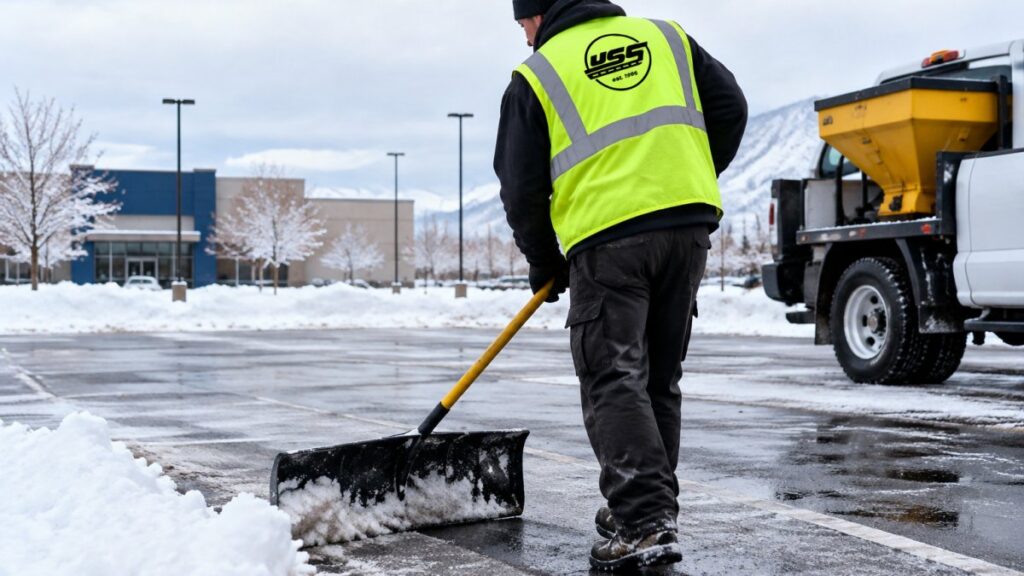
Specify service areas explicitly. Entrances, drive lanes, fire lanes, accessible parking spaces and their connecting routes, sidewalks, and curb ramps all need to be cleared. Snow storage locations must be designated and kept away from drains, sight lines, and accessible paths. Piling snow on landscaped islands or against buildings can cause damage and block visibility.
Deicing responsibilities should be clear: who supplies materials, what products are used, and who applies them. Require the vendor to follow label rates and keep application records. Damage protocol matters too, require photo documentation of any plow strikes to curbs, islands, or pavement, and establish a process for reporting and repairing damage.
A service agreement protects both parties. It sets expectations, provides a paper trail for liability, and helps you enforce performance. Include a clause for post-storm inspection and a contact list for escalations. Without it, you are relying on memory and goodwill, which rarely survive the first heavy snowfall.
Watch out: verbal agreements often leave you without recourse if service is late or damage occurs. Get everything in writing, including the trigger depth, response time, and documentation requirements.
Refresh Striping and Mark Obstacles for Plow Operators
Fresh pavement markings do more than look good. They guide drivers, mark accessible spaces, and show plow operators where curbs, islands, and medians sit under the snow.
Before winter, restripe faded lines and repaint accessible spaces so they stay clear. Then mark the hazards a plow can hit: curbs, parking islands, medians, fire hydrants, and bollards. Reflective markers and taller stakes help operators see them when snow covers the ground.
If your lines are worn, striping now saves confusion and collisions later. Clear markings also keep your lot compliant and easy to navigate all winter.
Parking Lot Maintenance After Winter Ends
Parking lot maintenance after winter is where you catch the damage the season left behind. Freeze-thaw cycles, plows, and salt all take a toll, and spring is the time to fix it.
Inspect the lot as the snow clears. Look for new potholes, heaved pavement, cracked sealcoat, damaged curbs, and faded markings. Schedule spring repairs before the damage spreads and repair costs climb.
This is also when you compare conditions to your fall inspection notes. The difference tells you which areas need more attention next year, and whether your preventive maintenance is actually paying off.
Schedule Your Winter Preparation Walkthrough
Winter damage is predictable, and so is the fix: inspect, repair, protect, and plan before the first freeze. Properties that do this work in fall spend less on emergency repairs and keep lots safer all season.
Utah Sealcoat & Striping has been in the asphalt maintenance field for over 30 years. Services include sealcoating and pavement striping, and all services come with a warranty. The company works around client schedules and keeps open lines of communication from quote to finish.
Get started with Utah Sealcoat & Striping and walk into winter with a lot that’s ready for snow, salt, and plow traffic.
Ready to protect your pavement before the cold sets in? Our team can assess your lot and build a prep plan that fits your property and your calendar.
Frequently Asked Questions
What should be included in a winter parking lot preparation checklist?
A parking lot winter preparation checklist should cover a full pavement inspection and condition report, pothole and crack repair, sealcoating while curing conditions allow, grading and drainage checks, catch basin cleaning, refreshed striping, and hazard marking for curbs and islands. Add a snow removal plan with deicing material selection, plus a documentation log for before-and-after photos. Run the checklist in early fall so every repair cures before the first freeze.
Can you stripe a parking lot in cold weather?
Standard water-based pavement marking paint needs warmer surface temperatures to cure properly, so most striping is scheduled before cold temperatures set in. In colder months, contractors often switch to specialized cold-weather or thermoplastic markings that bond at lower temperatures. Check the manufacturer’s application range for the product being used, and avoid striping over damp or frozen pavement. If striping is urgent in winter, ask your provider which marking type suits the current conditions.
How do you prevent potholes in a parking lot during winter?
Potholes form when water seeps into cracks, freezes, expands, and pushes pavement apart. Preventing them means sealing cracks before winter, repairing any existing potholes with proper hot-mix or cold-patch material, and making sure drainage moves water off the surface. Clean catch basins and storm drains so meltwater has somewhere to go. Fix low spots that hold standing water. A sealed, well-drained lot gives freeze-thaw cycles far less to work with.
What should property managers inspect after winter?
After winter, walk the lot for new potholes, widened cracks, heaved or settled pavement, damaged curbs and islands, faded or scraped markings, and clogged drains. Look for snowplow damage along edges and at obstacle strikes. Photograph and log each issue with location and severity, then prioritize repairs by safety risk and traffic volume. Catching spring damage early keeps small defects from growing through the next freeze-thaw season and helps with budgeting.

