
Table of Contents
- Why Asphalt Parking Lot Maintenance Matters
- 1. Implement Regular Sweeping and Debris Removal
- 2. Manage Drainage and Prevent Water Infiltration
- 3. Address Parking Lot Crack Repair Early
- 4. Apply Parking Lot Sealcoating on Schedule
- 5. Patch Potholes and Surface Damage Promptly
- 6. Manage Traffic Load and Weight Distribution
- 7. Plan for Parking Lot Resurfacing When Needed
- Putting It All Together: Your Parking Lot Maintenance Strategy
- Frequently Asked Questions
Last Updated: October 18, 2026
Why Asphalt Parking Lot Maintenance Matters
Your parking lot is one of the first things customers see. A well-maintained asphalt surface signals professionalism and care. A cracked, pothole-filled lot sends the opposite message.
The truth is simple: asphalt doesn’t last forever. Weather, traffic, and time all take their toll. But here’s what most property managers miss: you can dramatically extend asphalt parking lot life with the right maintenance approach.
At Utah Sealcoat & Striping, we’ve worked with commercial properties, HOAs, and facility managers across the region for over 30 years. We’ve seen parking lots that lasted 15 years and others that lasted 25. The difference wasn’t luck. It was consistent, proactive maintenance.
This guide covers seven proven strategies to extend asphalt parking lot life. Each one addresses a specific threat to your pavement. Together, they form a complete maintenance plan that protects your investment and keeps your lot looking sharp.
The best time to start maintaining your parking lot is before you see major damage. Small repairs now prevent expensive resurfacing later.
1. Implement Regular Sweeping and Debris Removal
Debris doesn’t seem like a threat to asphalt. But it is.
Leaves, dirt, sand, and gravel trap moisture against the pavement surface. That moisture seeps into small cracks and weakens the asphalt from inside. Over time, this accelerates deterioration.
Regular sweeping keeps your lot clean and dry. Here’s how to approach it:
- Sweep or blow debris at least weekly during dry seasons
- Remove debris immediately after storms
- Pay special attention to low spots where water pools
- Clear gutters and storm drains to prevent blockages
A clean parking lot also looks better. Customers notice. It reflects well on your business.
Many property managers skip this step because it seems too simple. That’s a mistake. Regular sweeping is one of the cheapest ways to protect asphalt parking lot life. It takes minimal time and effort but delivers real protection.
Clean pavement lasts longer. Debris traps moisture and accelerates crack formation.
2. Manage Drainage and Prevent Water Infiltration
Water is asphalt’s worst enemy.
When water sits on your parking lot, it seeps into the base layer beneath the surface. This weakens the structural support. Freeze-thaw cycles make it worse. Water expands when it freezes, pushing the pavement up and creating cracks.
Proper drainage prevents this damage. Here’s what to focus on:
- Inspect your lot for standing water after rain
- Clear storm drains and catch basins regularly
- Check that parking lot slopes slightly to direct water away from buildings
- Seal cracks promptly to prevent water infiltration
- Consider adding French drains in chronically wet areas
Standing water is a red flag. If you see puddles that don’t dry within hours, you have a drainage problem. Address it before it becomes expensive.
Water management is essential to extend asphalt parking lot life. It’s not glamorous, but it works. We recommend checking drainage at least twice a year, especially before heavy rain seasons.
3. Address Parking Lot Crack Repair Early
Small cracks turn into big problems fast.
A hairline crack might seem harmless. But water gets inside. The crack spreads. Within months, it becomes a pothole. At that point, repair costs jump dramatically.
Early crack repair stops this cycle. Here’s what you need to know:
Catch cracks early. Walk your lot monthly and look for new cracks. They’re easier to fix when they’re small.
Don’t wait for spring. Winter weather makes cracks worse. Repair them in fall before freeze-thaw cycles begin.
Use quality sealant. Cheap crack filler fails quickly. Professional-grade sealant lasts longer and actually bonds to the asphalt.
Address alligator cracking immediately. When cracks form a pattern that looks like alligator skin, the pavement is failing underneath. This requires professional assessment.
Crack repair is one of the most cost-effective parking lot maintenance tasks. A $200 repair now beats a $2,000 pothole repair later. This is where Utah Sealcoat & Striping focuses heavily with our clients. We catch problems early and fix them right.
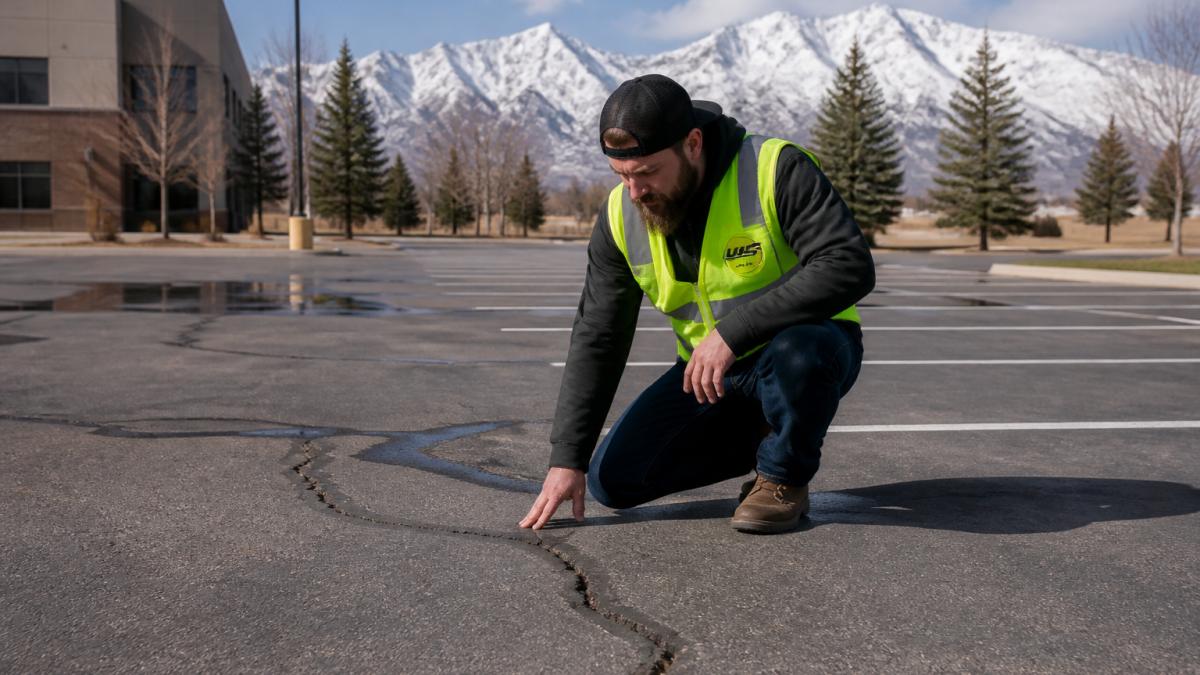
Ignoring small cracks leads to rapid deterioration. Water infiltration accelerates damage exponentially once cracks form pathways into the base layer.
4. Apply Parking Lot Sealcoating on Schedule
Sealcoating is preventive armor for your asphalt.
A sealcoat is a protective layer applied over the asphalt surface. It shields the pavement from UV rays, water, and oxidation. Think of it as sunscreen for your parking lot.
Without sealcoating, asphalt oxidizes. The surface becomes brittle. It fades from black to gray. Cracks form more easily. The pavement deteriorates faster.
Sealcoating extends asphalt parking lot life significantly. Here’s how to use it effectively:
- Apply sealcoat every 2-3 years as part of regular maintenance
- Schedule applications in spring or fall when temperatures are moderate
- Avoid sealcoating in direct sunlight or rain
- Use professional-grade products, not DIY options
- Plan for lot closure during application (typically 24-48 hours)
Sealcoating also improves appearance. Your lot looks darker and more professional. Customers notice the difference.
One common question we hear: “My sealcoat failed last time. Why should I do it again?” Often, the problem was poor surface preparation or low-quality materials. Professional sealcoating with proper prep work lasts. It’s an investment that pays back through extended pavement life.
5. Patch Potholes and Surface Damage Promptly
Potholes are expensive and dangerous.
They catch water. They damage vehicles. They create liability issues. A customer who hits a pothole might pursue a claim against your property.
Address potholes immediately. Don’t wait for spring. Don’t put it off until you have time.
Here’s the right approach:
- Inspect your lot weekly for new potholes
- Mark potholes with cones or paint if you can’t repair immediately
- Use temporary patching for short-term fixes
- Plan permanent repairs within 2 weeks
- Consider sealcoating after repairs to blend patches with surrounding pavement
Temporary patches are okay for emergencies. But they fail quickly. Permanent repairs involve removing damaged asphalt, preparing the base, and filling with quality material.
Surface damage beyond potholes also needs attention. Edge cracking, raveling (where the surface breaks apart), and spalling (where chunks break away) all signal deterioration. Professional assessment helps you prioritize repairs.
Small repairs now prevent big repairs later. This is a core principle of extending asphalt parking lot life. We recommend a monthly inspection routine.
6. Manage Traffic Load and Weight Distribution
Not all parking lots experience the same wear.
A lot with heavy truck traffic deteriorates faster than one with cars only. Concentrated traffic in certain areas creates stress points. Uneven loading accelerates damage.
Load management strategies reduce wear:
- Direct heavy vehicles to designated areas when possible
- Avoid concentrating parking in the same spots (use parking management systems)
- Prevent idling in one location
- Limit construction vehicle access to specific routes
- Consider weight restrictions for oversized vehicles
Some facilities can’t avoid heavy traffic. But you can manage it. Designate loading zones. Create clear traffic flow patterns. Spread the load across available space.
Load management works best when combined with other maintenance. Regular sweeping, drainage management, and sealcoating all help offset the stress from heavy use.
7. Plan for Parking Lot Resurfacing When Needed
Eventually, resurfacing becomes necessary.
Even with perfect maintenance, asphalt has a lifespan. Depending on climate, traffic, and maintenance quality, most parking lots need resurfacing every 15-25 years.
Resurfacing involves removing the top layer of old asphalt and applying a new surface. It’s more affordable than full replacement. It restores the lot to like-new condition.
Know when resurfacing is needed:
- Extensive cracking across 30% or more of the surface
- Large areas of raveling or spalling
- Severe rutting or deformation
- Multiple pothole repairs in a short period
- Widespread oxidation and surface deterioration
Resurfacing timing matters. Do it too early and you waste money. Wait too long and damage spreads to the base layer, requiring full replacement.
Professional assessment helps determine the right time. At Utah Sealcoat & Striping, we evaluate lot condition and recommend the best approach for your situation. Sometimes sealcoating and repairs extend life further. Sometimes resurfacing is the smart move.
Plan ahead for resurfacing. Budget for it over time. A well-maintained lot might need resurfacing once every 20 years. That’s manageable if you plan for it.
Property managers overseeing multiple lots or facilities with complex maintenance schedules benefit most from professional assessment and planned resurfacing timelines.
Putting It All Together: Your Parking Lot Maintenance Strategy
Extending asphalt parking lot life doesn’t require complex systems. It requires consistency.
Start with the basics: sweep regularly, manage water, and watch for cracks. Address small problems before they become big ones. Apply sealcoating on schedule. Plan ahead for resurfacing.
This approach works. We’ve seen it work for retail centers, office complexes, medical campuses, and HOAs across the region. Properties that follow this plan maintain their lots in good condition for years longer than properties that ignore maintenance.
The cost of prevention is always lower than the cost of repair. A $500 annual maintenance budget prevents a $15,000 resurfacing bill. That’s the math that matters.
Your parking lot reflects your business. A well-maintained lot signals competence and care. Customers notice. They feel confident doing business with you.
Your parking lot is a significant investment. Proper maintenance protects that investment and keeps your property looking professional. Utah Sealcoat & Striping has spent over 30 years helping property managers extend asphalt parking lot life through proven maintenance strategies backed by warranty coverage. Our team works with your schedule to keep your lot in top condition. Learn more about parking lot maintenance best practices from industry professionals to understand the full scope of care your lot deserves. Get a free quote from Utah Sealcoat & Striping today and let’s build a maintenance plan that works for your property.
Frequently Asked Questions
How long does an asphalt parking lot typically last?
A well-maintained asphalt parking lot typically lasts 15 to 20 years. However, lifespan depends heavily on climate, traffic volume, and maintenance consistency. Freeze-thaw cycles, heavy vehicles, and neglected repairs accelerate deterioration. Regular preventive maintenance, including sealcoating, crack repair, and drainage management, can extend the pavement lifespan by several years and protect your investment.
How often should an asphalt parking lot be sealcoated?
Most asphalt parking lots benefit from sealcoating every 2 to 3 years. Sealcoating protects the asphalt surface from oxidation, water infiltration, and UV damage, which are primary causes of surface deterioration. High-traffic lots or those exposed to harsh weather may need more frequent applications. A professional assessment can determine the right schedule for your specific pavement condition and climate.
What causes asphalt parking lots to deteriorate?
Asphalt deterioration stems from multiple factors: water infiltration through cracks, freeze-thaw cycles that expand and contract the surface, heavy vehicle traffic, oxidation from sun exposure, and debris accumulation trapping moisture. Standing water and poor drainage accelerate damage. Regular inspection, prompt crack sealing, and sealcoating help prevent these causes and extend the pavement lifespan significantly.
When should an asphalt parking lot be resurfaced?
Resurfacing is typically needed when the asphalt surface shows extensive alligator cracking, widespread potholes, or significant rutting that cannot be repaired through patching or seal coating. If your pavement inspection reveals that more than 25% of the surface is damaged or if repairs are becoming frequent and costly, resurfacing may be more cost-effective than ongoing maintenance. A professional assessment will help you determine the right timing.
