
Table of Contents
- How Parking Lot Striping Improves Property Value
- Parking Lot Striping Benefits for Safety and Liability
- Parking Lot Traffic Flow Markings and Vehicle Organization
- Professional Appearance and Curb Appeal
- ADA Parking Lot Striping Requirements and Compliance
- Parking Lot Restriping Frequency and Maintenance
- Maximizing ROI Through Quality Striping and Durability
- Frequently Asked Questions
Last Updated: October 20, 2026
How Parking Lot Striping Improves Property Value
Understanding why parking lot striping improves property value reveals why it is one of the most underrated investments a property owner can make. It directly impacts how potential buyers, tenants, and customers perceive your commercial property. At Utah Sealcoat & Striping, we’ve seen firsthand how fresh, professional line striping transforms the entire appearance and functionality of a parking area.
Parking lot striping improves property value in multiple ways. It’s not just about aesthetics. Fresh markings improve safety, organize traffic flow, ensure compliance with accessibility laws, and protect your pavement investment. Each of these factors contributes to a higher property valuation when you decide to sell or refinance.
To understand why parking lot striping improves property value, think of it as the finishing touch on your property’s first impression. A parking lot with faded, unclear lines looks neglected. One with crisp, bright markings looks professionally maintained. That difference translates directly into perceived value.
Parking Lot Striping Benefits for Safety and Liability
Clear pavement markings reduce accidents and collision risk on your property. When drivers can see exactly where to go, where to park, and where pedestrians cross, confusion drops dramatically.
This matters legally too. Property owners face liability when accidents happen in poorly marked parking areas. If a vehicle hits a pedestrian because directional arrows were faded, or if two cars collide at an unmarked intersection, your lack of clear striping becomes evidence of negligence. Insurance companies understand this risk. Properties with fresh, compliant markings often qualify for lower liability premiums.
Accessible parking spaces with proper striping and access aisles protect you further. When ADA-compliant spaces are clearly marked with the international symbol and proper dimensions, you demonstrate due diligence. This reduces exposure to accessibility complaints and lawsuits.
Fresh striping also makes your property safer for customers and employees. They navigate confidently. Delivery drivers know where to go. Pedestrians see crosswalks clearly. The result is fewer accidents, fewer injuries, and lower overall risk for your business.
Parking Lot Traffic Flow Markings and Vehicle Organization
Poor traffic organization in a parking lot frustrates customers and damages your reputation. Drivers circle looking for spaces. Confusion leads to near-misses. People leave negative reviews about the parking experience before they even enter your business.
Strategic directional arrows, clear lane markings, and organized space layouts solve this. When parking lot striping establishes obvious traffic flow, vehicles move predictably. Drivers find spaces faster. The lot feels larger and more organized than it actually is.
This improved vehicle circulation also protects your pavement. When traffic flows in organized patterns, wear distributes evenly. Random driving across unmarked lots creates ruts and accelerated damage. Clear striping channels vehicles into designated paths, extending the life of your asphalt.
For commercial properties, efficient parking organization directly impacts customer satisfaction. Shoppers spend less time frustrated and more time in your stores. Tenants experience easier access. The parking lot becomes an asset instead of a pain point.
Professional Appearance and Curb Appeal
Your parking lot is often the first thing customers see. Faded striping makes even a new building look old and poorly maintained. Fresh, bright markings immediately signal that the property owner cares.
This curb appeal factor matters more than many property managers realize. Commercial tenants evaluate properties partly on appearance. Retail customers form opinions about a business based on its parking area. Potential buyers assess overall property maintenance by looking at the lot.
Professional striping also communicates quality standards. It tells people: “This business takes pride in details. This property is well-managed.” That perception influences leasing decisions, customer loyalty, and purchase offers.
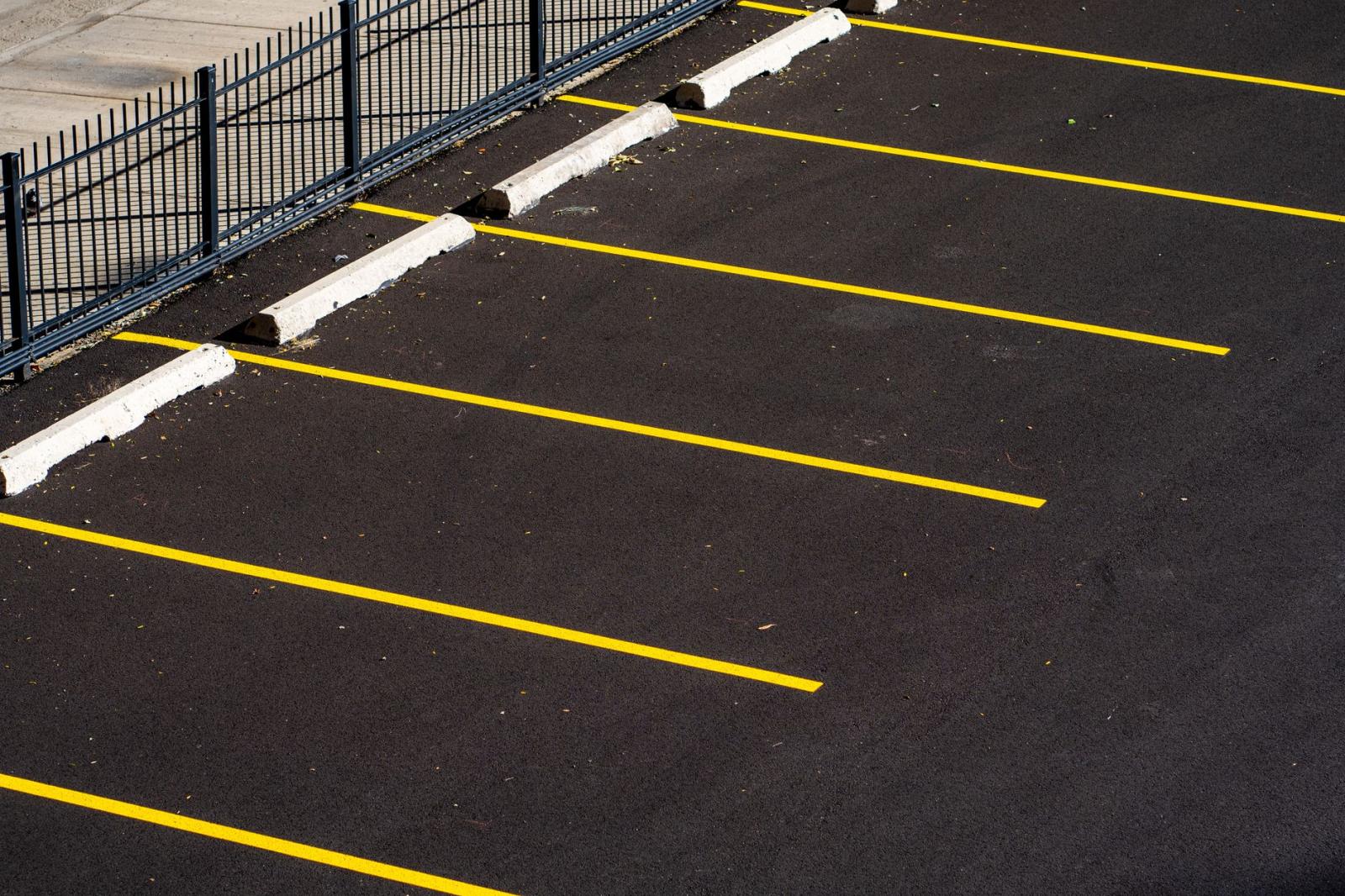
When you maintain parking lot striping regularly, you’re investing in your property’s image. That investment pays back through higher occupancy rates, better tenant retention, and stronger resale value.
ADA Parking Lot Striping Requirements and Compliance
Accessible parking spaces must meet specific federal standards (Accessible Parking Spaces). The Americans with Disabilities Act (ADA) requires properly sized accessible spaces with designated access aisles (Accessible Parking Spaces). These must be clearly marked with the international symbol of accessibility and striped appropriately.
Non-compliance carries real consequences. Violations can result in complaints, lawsuits, and fines. Property owners who fail to maintain ADA-compliant striping face legal exposure. More importantly, accessible parking spaces allow people with disabilities to access your property safely and independently.
Proper ADA parking lot striping includes:
- Accessible spaces at the correct width (96 inches minimum for standard spaces) (Accessible Parking Spaces)
- Access aisles of proper width (60 inches minimum)
- Clear surface markings with the international symbol
- Proper signage at accessible spaces
- Correct slope and surface conditions
Utah Sealcoat & Striping understands these requirements. We stripe parking lots to current ADA standards, protecting your property from compliance issues while ensuring your lot serves all customers equally.
Regular restriping keeps your accessible parking compliant. Over time, markings fade. Symbols become unclear. Restriping ensures your lot meets current standards and demonstrates your commitment to accessibility.
Parking Lot Restriping Frequency and Maintenance
How often you restripe depends on traffic volume, climate, pavement condition, and the materials used. A practical maintenance plan combines regular inspection with a clear restriping schedule so markings never fade to the point of creating safety or compliance issues.
How often to restripe
Most practitioners find the following ranges work as a starting point:
- High-traffic lots (retail centers, busy offices, event venues): restripe every 1-2 years.
- Moderate-traffic lots (professional offices, light retail): every 2-3 years.
- Low-traffic lots (storage, occasional-use areas): every 3-5 years or as needed.
These are guidelines, not rules. The key indicator is visibility: when you cannot clearly see lines from a normal driving distance, it is time to restripe. Faded markings defeat the purpose and create liability exposure.
Climate and material considerations
Climate significantly affects stripe life. Intense sun fades paint. Freeze-thaw cycles and snowplow damage accelerate wear. In regions with harsh winters, expect more frequent restriping. Water-based traffic paint is common and cost-effective for low-to-moderate traffic, while thermoplastic or epoxy can last longer in high-traffic areas but cost more and require specific application conditions.
Step-by-step striping and maintenance process
A professional restriping project typically follows these steps:
- Inspection and layout planning. The contractor assesses current markings, pavement condition, and traffic flow. They plan the layout to meet accessibility requirements and optimize space utilization.
- Surface preparation. The area is cleaned of dirt, debris, and loose paint. Cracks are filled, and the surface is allowed to dry. Proper prep is critical for adhesion.
- Paint selection. The contractor chooses a paint type based on traffic volume, climate, and budget. Water-based paint is common; more durable materials may be recommended for high-wear areas.
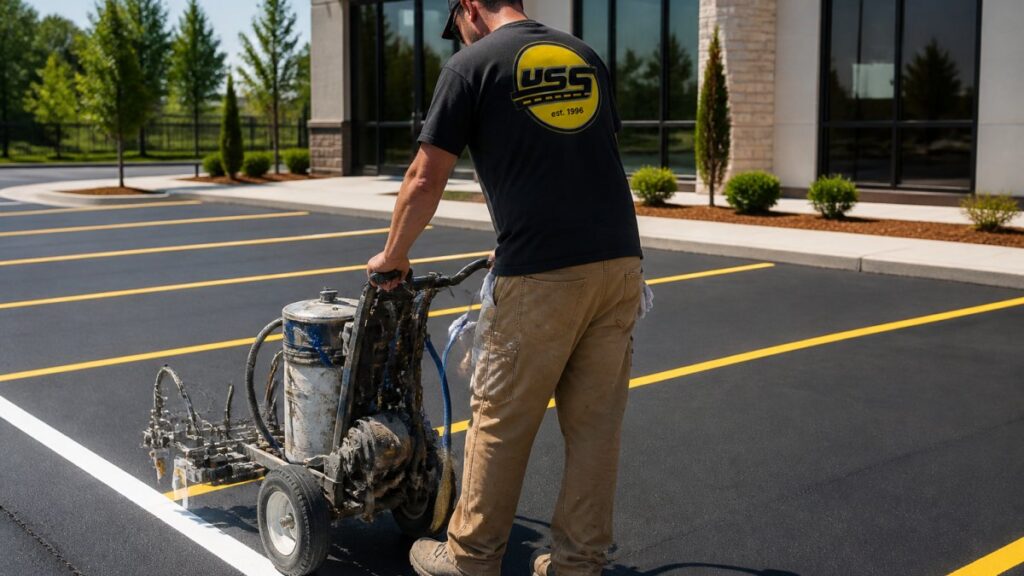
- Application. Striping is applied using professional equipment for crisp, uniform lines. ADA symbols, directional arrows, and crosswalks are stenciled or hand-painted as needed.
- Cure time and reopening. Most water-based paints require a short cure time before vehicles can use the lot. The contractor will advise on reopening.
Building a maintenance plan
A simple annual assessment keeps your lot in good shape. Walk the lot and check for faded lines, missing symbols, damaged ADA spaces, and worn crosswalks. Schedule restriping before the busy season and after winter if your area uses snowplows. Keep records of when striping was last performed and what materials were used.
Utah Sealcoat & Striping recommends scheduling a parking lot assessment annually. We evaluate stripe condition and recommend restriping when needed. This proactive approach keeps your lot looking sharp and functioning safely year-round. Contact Utah Sealcoat & Striping for a free quote to set up your assessment.
Maximizing ROI Through Quality Striping and Durability
Parking lot striping is a relatively low-cost investment compared with repaving or major repairs, but the return depends on material choice, surface preparation, and how well the markings are maintained. Most property owners see the strongest ROI when they treat striping as part of a pavement management plan rather than a one-time cosmetic fix.
Cost factors that affect striping ROI
Several variables drive the cost of a striping project:
- Lot size and space count. Larger lots with more stalls require more paint and labor. Pricing is often quoted per linear foot of stripe or per stall, so a 100-space lot costs more than a 40-space lot.
- Layout complexity. Directional arrows, crosswalks, hatched areas, ADA symbols, and stencils add labor and material. A simple grid of stalls is cheaper per space than a lot with complex traffic patterns.
- Surface condition. Cracked, dirty, or newly sealed asphalt needs cleaning, crack filling, or a cure time before striping. Poor surface prep shortens stripe life and reduces ROI.
- Paint type. Water-based traffic paint is common and cost-effective for low-to-moderate traffic. More durable materials like thermoplastic or epoxy cost more upfront but can last longer in high-traffic areas.
- Accessibility requirements. ADA-compliant spaces, access aisles, and signage add scope. Skipping them creates liability exposure that outweighs any short-term savings.
Measuring the return
ROI from striping is not a single number. It shows up across several operational and financial areas:
- Space utilization. Clear markings help drivers find spaces faster, which can reduce circling and improve turnover. Better utilization supports revenue in paid lots and satisfaction in retail or office settings.
- Maintenance intervals. Quality materials and proper prep extend the time between restriping. Fewer restriping cycles lower lifetime cost.
- Incident risk. Clear traffic flow and pedestrian markings reduce collision and injury risk. Lower risk can translate into fewer claims and, in some cases, more favorable insurance terms.
- Pavement life. Organized traffic patterns distribute wear more evenly, which can extend asphalt life and defer costly repairs.
- Perceived value. A well-striped lot signals professional management, which supports tenant retention and buyer interest.
Durability trade-offs
No striping material lasts forever. Water-based paint typically wears faster in high-traffic areas and may need restriping every 1-2 years. Thermoplastic and epoxy can last longer but cost more and require specific application conditions. Climate also matters: freeze-thaw cycles, snowplow damage, and intense sun all shorten stripe life. In regions with harsh winters, expect more frequent restriping regardless of material.
Protecting the investment
Proper surface preparation is the foundation of durable striping. Cleaning, crack filling, and ensuring the asphalt is dry and cured before painting improve adhesion. Skipping these steps saves money upfront but leads to premature fading and peeling.
Utah Sealcoat & Striping backs its work with a warranty and uses quality materials and proven application methods. We show up on time, finish on budget, and deliver results that hold up. Contact Utah Sealcoat & Striping for a free quote to discuss a striping plan that fits your lot and budget.
Frequently Asked Questions
How does parking lot striping affect property value?
Clear, well-maintained parking lot striping signals professional property management and increases perceived value. Fresh markings improve traffic flow, reduce accident risk, and enhance curb appeal—all factors that appraisers and potential tenants evaluate. Properties with organized, clearly marked parking appear more professional and trustworthy, directly influencing leasing decisions and property assessments.
How often should you restripe a parking lot?
Most parking lots benefit from restriping every 2-3 years, depending on traffic volume, climate conditions, and paint quality. High-traffic areas may need restriping sooner. Regular maintenance prevents liability issues from faded lines and ensures ADA compliance. Professional assessment can determine the right schedule for your specific property.
What are the key ADA parking lot striping requirements?
ADA-compliant parking lots must include accessible parking spaces with proper dimensions, access aisles, and clear surface markings. Van-accessible spaces require 8-foot access aisles, while standard accessible spaces need 5-foot aisles. All markings must be visible and properly positioned. Failure to meet these requirements can result in citations and liability exposure, making professional compliance essential.
Can faded parking lot lines create safety and liability problems?
Yes. Faded lines reduce visibility, increasing collision risk and pedestrian accidents. Unclear markings can lead to traffic confusion, door dings, and property damage. From a liability standpoint, faded markings demonstrate negligence in property maintenance, potentially increasing insurance premiums and exposing the owner to lawsuit risk if an accident occurs in poorly marked areas.
