
Last Updated: October 25, 2026
Quick Summary
Choose an asphalt sealcoating contractor by starting with referrals from local property managers and business owners, then verifying their experience, credentials, insurance, and references. Compare detailed estimates that include surface preparation, materials, application method, and warranty coverage to ensure you’re hiring a qualified professional, not just the lowest price.
- Ask for at least three recent references and call them to verify the contractor showed up on time and delivered quality work.
- Verify the contractor has been in business 5+ years, holds proper licensing and insurance, and belongs to professional organizations.
- Compare bids using a detailed checklist covering surface cleaning, crack filling, sealcoat material type, number of coats, and warranty terms.
- Watch for red flags like vague estimates, willingness to apply in poor weather, or repeated customer complaints about peeling or missed deadlines.
- Get everything in writing including scope of work, material specifications, schedule, payment terms, and warranty details before hiring.
Table of Contents
- Start With Referrals and Local Research
- Evaluate Experience, Credentials, and Insurance
- Check References and Read Customer Reviews
- Key Questions to Ask a Sealcoating Contractor
- How to Compare Sealcoating Contractor Estimates
- Understand Curing Time and Project Expectations
- Request Your Free Quote Today
- Frequently Asked Questions
Start With Referrals and Local Research
Choosing the right asphalt sealcoating contractor is one of the most important decisions you’ll make for your property. A poor choice leads to peeling, premature wear, and wasted money.
At Utah Sealcoat & Striping, we’ve seen firsthand how many property owners rush this decision. They pick the first contractor who answers the phone or chooses based on price alone.
Start your search the right way. See a similar guide for selecting contractors in related service areas. Ask for referrals from other property managers, HOA board members, and business owners in your area.
Check online reviews on Google, the Better Business Bureau, and industry platforms. Look for patterns in what customers say. One negative review doesn’t mean much. Multiple complaints about the same issue, peeling, missed deadlines, poor communication, tells you something real.
Search for local contractors who specialize in asphalt maintenance. A general contractor who dabbles in sealcoating is not the same as a company that does it day in and day out.
Key points to research upfront:
- How long has the contractor been in business?
- Do they have a physical location or just a phone number?
- What services do they actually offer?
- Are they licensed and insured?
- Do they have photos of completed projects?
Better Business Bureau rating guidelines can help you understand what to look for in contractor reviews and ratings.
Evaluate Experience, Credentials, and Insurance
Experience matters enormously in asphalt sealcoating. The process looks simple but it’s not. Surface preparation, weather conditions, material application, and curing time all affect whether the work lasts or fails within months.
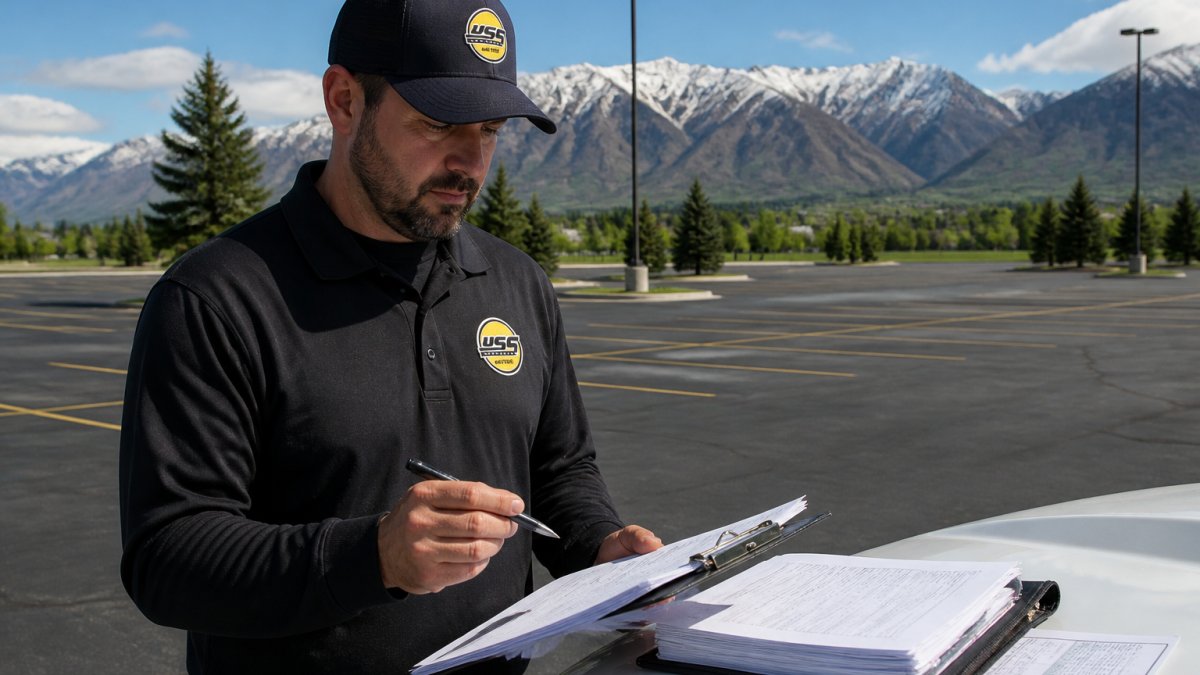
Ask how long the contractor has been in business. A contractor with 5+ years of experience has seen different seasons, different pavement conditions, and different problems. They know what works and what doesn’t.
Check their credentials. Are they licensed in your state? Do they belong to professional organizations like the National Asphalt Pavement Association? Memberships and certifications show they take their work seriously.
Insurance is non-negotiable. Ask to see proof of liability insurance and workers’ compensation coverage. Call the insurance company to verify the policy is active.
Ask how many projects the contractor completes per year. A busy, established contractor with steady work is usually a safer choice than one scrambling to fill their schedule.
Utah Sealcoat & Striping has been in business since 1996, with over 30 years of experience in the asphalt maintenance field. Our team knows every detail of the sealcoating process.
Check References and Read Customer Reviews
Don’t skip this step. A contractor’s references tell you whether they actually deliver what they promise.
Ask for at least three recent references from similar projects. Call them. Ask specific questions:
- Did the contractor show up when promised?
- Was the work completed on schedule?
- Did they communicate clearly throughout the project?
- Is the sealcoat holding up well?
- Would you hire them again?
Listen for hesitation or vague answers. If a reference says “it’s okay” instead of “they did great work,” that’s a warning sign.
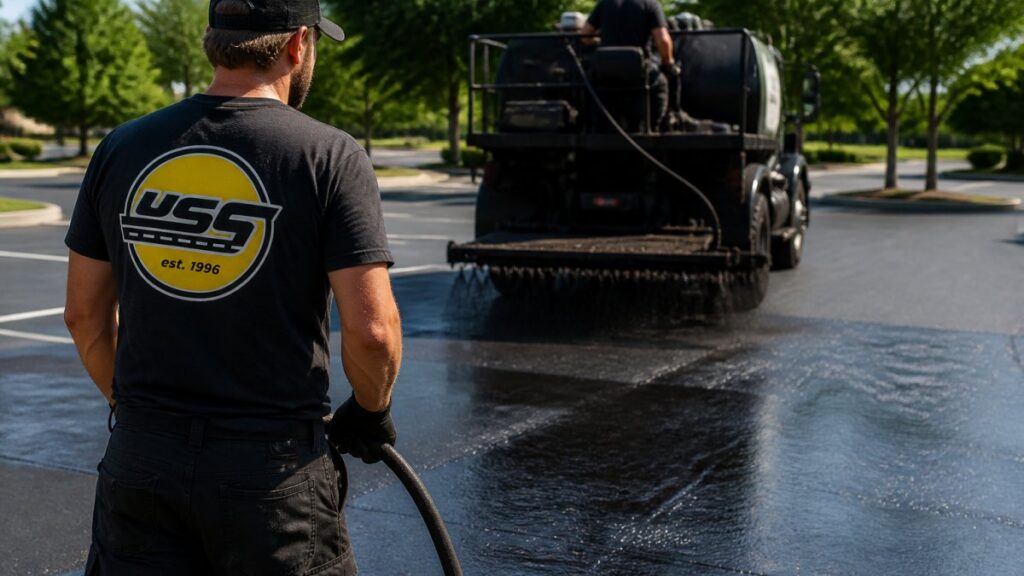
Visit completed projects if possible. See the work with your own eyes. Fresh sealcoat should be dark and even. Look at older jobs too, how does the sealcoat look six months or a year later?
Online reviews give you a broader picture. Read recent reviews, not just the five-star ones. Look at how the contractor responds to complaints. Do they take responsibility or make excuses? A contractor who addresses problems professionally is worth working with.
Watch for red flags in reviews:
- Repeated complaints about peeling or cracking
- Multiple mentions of missed deadlines
- Poor communication or unresponsive contractor
- Disputes over warranty claims
Key Questions to Ask a Sealcoating Contractor
Before you hire, have a detailed conversation with every contractor you’re considering. These questions separate professionals from amateurs.
Ask about surface preparation:
- How will you prepare the asphalt before sealcoating?
- Will you clean the surface and repair cracks?
- What happens if the pavement isn’t ready?
Surface prep is where most cheap contractors cut corners. Poor prep means the sealcoat won’t bond properly and will peel within weeks.
Ask about materials and application:
- What sealcoating material do you use?
- How many coats will you apply?
- What’s your application process?
Different materials perform differently. A contractor should explain what they’re using and why it’s right for your situation.
Ask about weather and curing:
- What weather conditions do you need to apply sealcoat?
- How long until the pavement can be used after application?
- What do I need to do to protect the work while it cures?
Sealcoating applied in rain or extreme heat won’t cure properly. The contractor should explain the curing timeline and what you need to do to protect the work.
Ask about warranty and follow-up:
- What warranty do you provide?
- If the sealcoat fails, what will you do about it?
- How long is the warranty period?
This is critical. A contractor confident in their work backs it with a real warranty. Get the warranty details in writing.
Ask about scheduling and communication:
- When can you start?
- How long will the project take?
- How will you keep me informed?
- What happens if the project runs behind schedule?
A professional contractor respects your time and your schedule. They communicate clearly about timelines and any changes.
How to Compare Sealcoating Contractor Estimates
You’ll get estimates from multiple contractors. Don’t just pick the lowest price. Compare what each contractor is actually offering, and make them prove it in writing.
A simple side-by-side table is a start, but it won’t tell you whether the bids are truly equivalent.
Bid normalization checklist:
| Line Item | What to Look For | Why It Matters |
|---|---|---|
| Surface cleaning method | Power blowing, sweeping, or washing? | Debris left on the surface prevents proper bonding. |
| Crack filling | Included? What size cracks? What material? | Cracks over 1/4 inch should be filled before sealing; otherwise water intrusion continues. |
| Oil spot treatment | Included? What primer or cleaner? | Oil and grease repel sealcoat; untreated spots will fail first. |
| Patching | Included? What depth and area? | Sealcoat cannot fix structural failures like alligator cracking or potholes. |
| Sealcoat material type | Coal tar, asphalt emulsion, or polymer-modified? | Different materials have different durability and curing characteristics. |
| Dilution ratio | How much water is added? | Over-dilution is a common way to cut costs and reduce longevity. |
| Number of coats | One or two? | Two thin coats generally outperform one thick coat. |
| Application method | Spray, squeegee, or brush? | Method affects coverage and penetration. |
| Curing time | How many hours before traffic? | Unrealistic promises are a red flag. |
| Warranty | Length and what it covers? | A written warranty is your protection if the sealcoat fails. |
| Cleanup and site protection | Included? | Overspray on buildings, landscaping, or storm drains can create liability. |
Ask each contractor to fill in the same table. If a bid is vague, just “sealcoating” with a lump sum, ask them to break it down. A professional will have no trouble doing so.
Watch for exclusions. A low bid often excludes crack filling, oil spot priming, or a second coat. Those items may be listed as “optional” or buried in fine print.
Ask about material quantities. A proposal that lists the number of gallons of sealcoat to be applied (and the dilution ratio) is more transparent than one that doesn’t.
Get everything in writing. The estimate should include the scope of work, material specifications, schedule, payment terms, and warranty. Never hire based on a verbal quote or a handshake deal.
FTC guidance on contractor estimates and pricing outlines what you should expect in a clear, detailed estimate.
Ask each contractor to explain any line item that differs significantly from the others. Sometimes the difference is just overhead; sometimes it’s a corner being cut. The explanation itself tells you a lot about how they work.
Understand Curing Time and Project Expectations
Sealcoating isn’t instant. The work has to cure properly or it won’t last. But “24-48 hours” is only part of the story.
Temperature and weather windows. Most sealcoat manufacturers specify application when pavement and air temperatures are above 50°F and rising, with no rain forecast for at least 24 hours.
Curing vs. drying. Sealcoat dries to the touch relatively quickly, but full curing takes longer. Traffic on a partially cured surface can cause scuffing, tracking, and premature wear.
Reopening guidance. For most residential driveways, light foot traffic may be possible after a few hours, and vehicle traffic after 24-48 hours. Commercial lots with heavy traffic may need longer.
What can go wrong. Rain during curing can wash out the sealcoat or cause a mottled appearance. High humidity slows curing.
Realistic expectations. Sealcoating is maintenance, not a permanent fix. It protects asphalt from UV damage, water penetration, and oxidation.
Ask about maintenance between applications. Regular cleaning and prompt crack repair extend the life of your pavement and protect your investment.
Asphalt Pavement Association maintenance guidelines provides industry standards for sealcoating application and reapplication schedules.
If a contractor guarantees a specific reopening time without asking about temperature, humidity, or your pavement’s condition, be skeptical. Curing times vary, and a professional will give you a range based on the actual conditions.
Request Your Free Quote Today
You now know what to look for in an asphalt sealcoating contractor. You know the questions to ask, the details to compare, and the red flags to watch for.
The next step is to get quotes from contractors you trust. Learn about the sealcoating service and see how it protects your pavement. When you’re ready, get a free quote from Utah Sealcoat & Striping. We’ll walk you through the entire process, answer all your questions, and give you a detailed estimate with no surprises.
Our team has 30 years of experience in asphalt maintenance. We handle surface prep the right way, use quality materials, and back every project with a warranty. We show up on time, communicate clearly, and deliver the quality work your property deserves.
Frequently Asked Questions
What should I look for in an asphalt sealcoating contractor’s references?
Ask for at least three recent references from similar projects (driveway, parking lot, or HOA) completed within the last 12 months. Contact them directly and ask about quality of work, adherence to timeline, cleanliness during the job, and whether the sealcoat held up as promised. A contractor with strong references will provide contact information without hesitation and encourage you to call.
What questions should I ask before hiring a sealcoating contractor?
Ask about surface preparation methods, the specific sealcoating material they use, how long the work will take, curing time before traffic returns, warranty coverage and duration, insurance details, and whether they handle any necessary repairs before sealcoating. Also clarify their communication process, how they handle weather delays, and whether the quote includes cleanup and equipment removal.
How long does asphalt sealcoating take to cure after application?
Most asphalt sealcoating requires 24 to 48 hours of cure time before vehicle traffic can safely return, depending on temperature, humidity, and the specific product used. Some contractors recommend waiting longer in cooler weather or high-humidity conditions. Ask your contractor for a specific timeline based on current weather forecasts and confirm when the pavement will be fully ready for use.
What are red flags that indicate a poor sealcoating contractor?
Watch for contractors who avoid providing references, won’t put estimates in writing, offer prices significantly lower than competitors without explanation, lack proper licensing or insurance, rush surface preparation, or guarantee results that sound unrealistic. Also be cautious of those who pressure you to decide immediately, cannot explain their process clearly, or have poor online reviews mentioning peeling or premature failure.
Choosing the right contractor protects your pavement and your budget. Take your time with this decision. Get referrals, check credentials, ask detailed questions, and compare estimates carefully. The contractor you choose should make you feel confident that your asphalt is in good hands. Get your free quote today and see why property managers across the region trust Utah Sealcoat & Striping to keep their pavement looking fresh and protected.

