
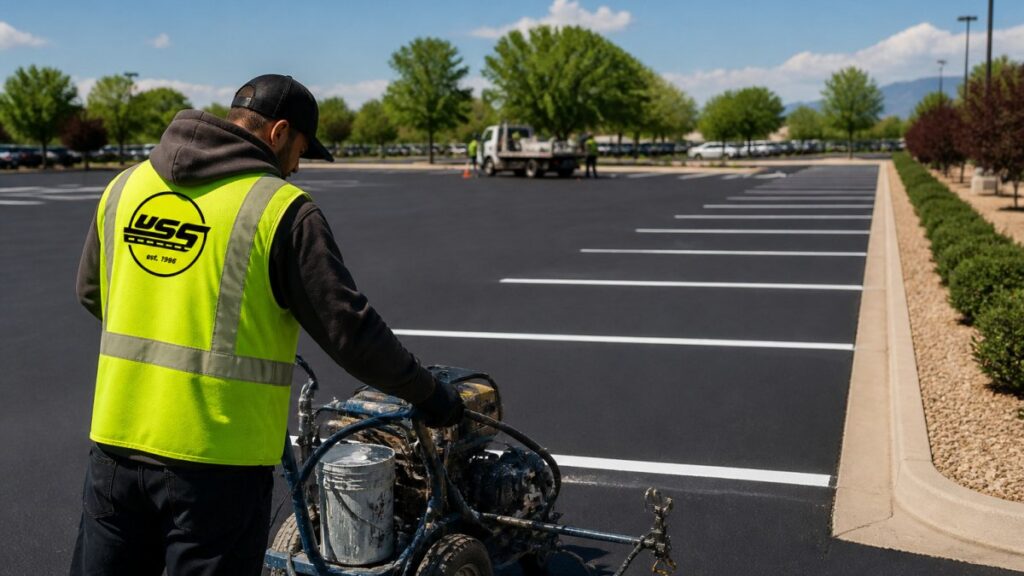
Last Updated: October 30, 2026
Quick Summary
Parking lot redesign can be worth it for ROI when the work fixes real problems such as cracking, drainage failure, or a confusing layout. Compare the project cost against the cost of doing nothing, including deferred replacement, liability and lost tenants. Use a worksheet with conservative, base and optimistic assumptions before signing a contract.
- Redesign returns depend on how worn the lot is and how long you will hold the property.
- Compare the redesign cost against the costs of doing nothing, not against zero.
- Resurfacing usually wins when the base is sound; replacement fits failed bases or layout changes.
- Track utilization, capacity, revenue per space and operating costs before and after the work.
- A written access plan prevents phased construction from erasing early projected returns.
Table of Contents
- What a Parking Lot Redesign Typically Involves and Why Costs Vary
- How to Calculate Parking Lot Improvement ROI With a Worked Example
- Parking Lot Resurfacing vs. Replacement: Which Option Pays Off
- Building a Parking Lot Maintenance Plan That Protects Your Investment
- Scheduling Your Parking Lot Project and Requesting a Free Quote
- Frequently Asked Questions
Is parking lot redesign worth it for ROI? For many commercial property owners in Utah and Nevada, the answer is yes, but only when the work fixes real problems and the numbers are checked before the contract is signed.
The short answer depends on three things: how worn the lot is, how it works for the people who use it, and how long you plan to hold the property. A lot with heavy cracking and poor drainage may need replacement rather than a cosmetic refresh. A lot that is structurally sound but confusing to drive through may only need restriping and a better layout. Those are very different investments, and they return value in different ways.
Below, we walk through what a redesign usually includes, how costs vary, a worked ROI example, and when resurfacing beats full replacement.
What a Parking Lot Redesign Typically Involves and Why Costs Vary
A parking lot redesign changes how the lot is laid out and built, not just how it looks. Most projects include some mix of pavement repair, new striping, updated stall sizes, and changes to traffic lanes or entry points.
Costs depend on the condition of each lot. The main cost drivers include:
- Pavement condition: Deep cracks, potholes, and base failure cost more than surface wear.
- Lot size and shape: Larger, irregular lots take more labor and materials per stall.
- Layout changes: Moving curbs, islands, or entrances adds demolition and concrete work.
- Drainage fixes: Correcting standing water often requires regrading or new catch basins.
We recommend getting a detailed scope rather than a single number. A clear scope shows which repairs are included and which are optional.
How to Calculate Parking Lot Improvement ROI With a Worked Example
Parking lot ROI is not a single formula, but a simple worksheet makes the decision clearer. The goal is to compare two futures side by side: the lot as it is today, and the lot after redesign. Most owners who skip this step compare the redesign cost to zero, which makes almost any project look expensive. The right comparison is redesign cost versus the costs and lost value of doing nothing.
Start with the total project cost, then estimate the annual value the improvement creates. Those value sources usually include:
- Avoided costs from delaying a full replacement
- Higher lease rates or occupancy from a better-looking, safer lot
- Fewer liability claims from trip hazards and poor drainage
- More parking turnover or capacity from a smarter layout
- Lower operating costs from LED lighting, better drainage, and fewer emergency repairs
A Transparent Worksheet You Can Adjust
Here is a simplified example using hypothetical figures. A retail center owner is considering a $48,000 redesign that includes resurfacing, new striping, and reconfigured stalls.
| Item | Amount |
|---|---|
| Redesign cost | $48,000 |
| Avoided replacement cost spread over 5 years | $18,000 per year |
| Added annual lease income | $3,000 per year |
| Lower annual operating costs | $1,200 per year |
| Total annual value | $22,200 per year |
| Simple payback period | About 2.2 years |
| Five-year net value | About $63,000 |
The numbers here are illustrative only. Your actual results depend on your local leasing market, your lot’s condition, and how long the improvements last. The point of the worksheet is to make your assumptions visible so you can test them.
Run three versions of the worksheet: a conservative case, a base case, and an optimistic case. If the project still pays back within your holding period in the conservative case, the decision is usually sound.
Before-and-After Metrics to Track
A worksheet is only as good as the inputs. Before you approve a redesign, capture baseline numbers so you can measure results afterward. Owners often track:
- Utilization: Average peak-hour occupancy and how often the lot fills.
- Parking capacity: Usable stalls after restriping and layout changes.
- Revenue per space: Monthly or annual income divided by stall count.
- Operating costs: Lighting, drainage repairs, patching, and snow removal.
- Customer experience: Complaints about parking, door dings, or accessibility.
Comparing these metrics before and after the work turns a guess into a documented return. It also gives you defensible numbers if you refinance or sell.
Redesign Versus No Redesign
The clearest way to answer whether a redesign is worth it is to price the alternative. Doing nothing is not free. A failing lot typically produces rising patching costs, liability exposure from trip hazards, lost tenants, and a larger replacement bill later.
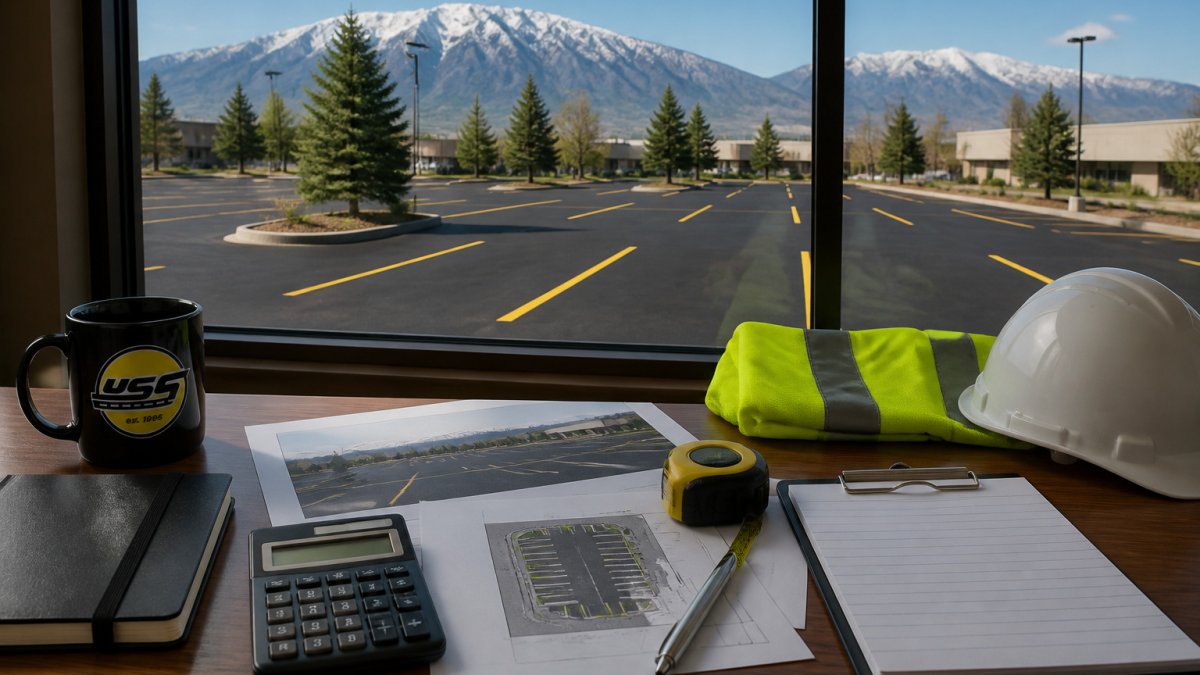
Parking Lot Resurfacing vs. Replacement: Which Option Pays Off
Most owners face a choice between resurfacing and full replacement. Resurfacing covers the existing base with a new surface layer, while replacement removes and rebuilds the asphalt from the base up. Owners comparing the two can review our sealcoating service to see whether a lower-cost surface treatment fits their lot. Each has a place, and the payback differs by option.
| Option | Relative cost | Main benefit | Typical payback pattern |
|---|---|---|---|
| Restriping and layout changes | Low | Better flow, more usable stalls, curb appeal | Often under one year when it adds stalls or lease value |
| Sealcoating and crack sealing | Low | Extends surface life, delays replacement | Spread over several years of deferred cost |
| Resurfacing | Medium | New surface over sound base | Pays back when it defers replacement by several years |
| Lighting upgrades | Medium | Safety, lower energy and liability costs | Several years from energy and claims savings |
| Drainage correction | Medium to high | Stops base damage and standing water | Pays back by preventing recurring repairs |
| Accessibility upgrades | Medium | Compliance and reduced liability | Required in many cases; value is risk avoidance |
| EV charging | High | Tenant attraction and new revenue | Longer payback; depends on demand and pricing |
| Full replacement | High | Rebuilds failed base and allows layout change | Justified when base has failed or layout must change |
When Resurfacing Makes Sense
Resurfacing is usually the better value when the base is still sound. Learn more about crack sealing and what the process involves before deciding.
Resurfacing works best when you want to delay a larger expense by several years. It also suits owners who plan to sell or refinance soon and need the lot to look strong without a large capital project.
When Full Replacement Is the Better Investment
Replacement often pays off when the base has failed. If that describes your lot, you can review our asphalt removal and replacement service to see how a full rebuild is handled.
Replacement also makes sense when the layout needs to change. If you are moving entrances, adding islands, or fixing a traffic pattern that causes congestion, rebuilding the lot gives you a clean result.
Phased Implementation and Disruption Costs
A redesign does not have to happen all at once. Phasing the work lets you keep the lot open and spread the cost.
Disruption has a real cost. Lost parking revenue during construction, temporary traffic control, and tenant communication all belong in the ROI worksheet. Planning work around slow seasons and scheduling the busiest zones last is a common approach.
Do not approve a phased plan without a written access plan. Lost parking during construction can erase the first year of projected returns if the busiest stalls are closed at peak times.
Environmental, Safety, and Regulatory Outcomes
Some redesign choices are driven by regulation as much as return. Stormwater requirements, accessible parking rules, and lighting safety standards can make certain upgrades mandatory. Those costs still belong in the worksheet, but they also reduce risk.
(/striping/) covers the layout of spaces and directional markings for a clear traffic pattern. Review the [wheel stop options](/wheel-stops/) to see which style suits your lot layout.
Building a Parking Lot Maintenance Plan That Protects Your Investment
A redesign only pays off if the lot is maintained after the work is done. Without a plan, cracks return, striping fades, and drainage problems come back.
We suggest a simple annual schedule:
- Inspect each spring and fall: Look for new cracks, standing water, and faded lines.
- Seal cracks early: Small cracks sealed promptly prevent water from reaching the base.
- Sealcoat on schedule: Most lots benefit from a surface seal every few years, depending on traffic and climate.
- Restripe as needed: Fresh lines keep traffic flowing and help with accessibility compliance.
- Document everything: Keep records of work, dates, and warranties for future buyers and lenders.
A consistent maintenance plan usually costs far less than emergency repairs, and it keeps the value from your redesign intact.
Scheduling Your Parking Lot Project and Requesting a Free Quote
Timing matters. Many owners aim to finish work before peak business seasons, and asphalt work depends on weather.
We maintain open communication and flexibility around your schedule. All of our services come with a warranty.
If you are weighing a redesign, start by requesting a free quote from Utah Sealcoat & Striping. We will look at your lot’s condition and explain which repairs are essential and which are optional.
Frequently Asked Questions
Is parking lot redesign worth the investment?
It is worth it when the existing lot has failed in ways that cost you money, such as poor drainage, faded or non-compliant striping, or layouts that slow traffic at peak hours. A redesign typically pays back when it reduces repair spending, restores usable parking capacity, or supports higher rents or tenant retention. If the pavement is still structurally sound, resurfacing or maintenance often delivers a better return. Compare the redesign cost against three to five years of avoided repairs and any revenue gained from added spaces or better access before deciding.
How do you calculate the ROI of parking lot improvements?
Add up the total project cost, including design, permits, construction, and any disruption to tenants. Then estimate the annual benefit, such as avoided repair costs, added parking revenue, or higher occupancy. Divide the net annual benefit by the total cost to get a simple annual return, and calculate the payback period by dividing cost by annual benefit. Use conservative estimates and get written quotes from contractors so the numbers reflect your actual property rather than assumptions.
When should a business redesign its parking lot instead of repairing it?
Redesign makes more sense when the problem is layout rather than surface condition. Examples include circulation that creates conflicts between vehicles and pedestrians, insufficient parking capacity for current demand, or accessibility gaps that need reconfiguration. If the base is cracked or failing across large areas, replacement may be needed. Repairs and resurfacing are generally the better choice when the lot’s structure is sound and the main issue is surface wear or striping.
How can better parking lot striping improve traffic flow and safety?
Clear striping and directional arrows guide drivers to the correct lanes and parking stalls, reducing backing conflicts and confusion at entrances. Accessible spaces must be marked to meet applicable federal ADA requirements, and facilities such as medical campuses and schools often need precise layouts. Fresh, visible striping also improves nighttime visibility.

